



Practical therapy for
depression, low mood, and feeling stuck
Evidence-based depression treatment for adults on the Central Coast & in Hornsby, in-person or via telehealth. Structured, collaborative, and tailored to how depression actually shows up in your life.
Evidence-based depression treatment for adults on the Central Coast & in Hornsby, in-person or via telehealth. Structured, collaborative, and tailored to how depression actually shows up in your life.




A clearer, more practical way to work on depression
Depression has a way of making life feel quietly heavier. Tasks that used to feel manageable start feeling overwhelming. Motivation disappears. Sleep and energy suffer. The things that used to give you a lift stop working, and slowly, life narrows around what you can still face doing.
If that sounds familiar, therapy offers a structured, evidence-based way to turn it around. Not through toxic positivity or telling you to "just push through", but by understanding how depression actually works, gently rebuilding momentum, and developing real skills to respond to it differently.
Around one in seven Australians will experience depression at some point in their lives (Black Dog Institute). It's common, but it can feel very isolating, and reaching out can be one of the hardest parts.
At MindSure Psychology, I'm James Wightman, a registered psychologist providing depression treatment to adults from across the Central Coast, including Erina, Terrigal, Woy Woy, Wyoming, Kariong, Narara, and surrounding suburbs. Sessions are available in-person in Gosford, in Hornsby, or via telehealth anywhere in Australia.
Ready to start? You can book online, or view Fees & Rebates for Medicare rebate information.

You can book online in under 2 minutes, or call if you'd prefer.
Check availability →Why depression is often harder to shift than it should be
Depression isn't laziness, weakness, or a lack of willpower. It's a self-reinforcing pattern, kept going by loops that feel helpful or protective in the moment, but quietly deepen the groove over time:
- 1Withdrawal feels safer, but starves the brain of rewardCancelling plans, stopping hobbies, and avoiding effort brings short-term relief. Over time, it removes the very things that lift mood, confirming the feeling that nothing works.
- 2Low energy creates a chicken-and-egg trapYou wait to feel motivated before doing things, but motivation usually arrives after action, not before. Depression flips the order, so nothing gets started.
- 3Self-criticism adds weight to the load"I should be coping better." "What's wrong with me?" The inner voice gets harsher the more you struggle, which deepens the very state it's trying to fix.
- 4Rumination feels like problem-solving, but isn'tReplaying what's wrong, what went wrong, and what might go wrong feels productive. It mostly just keeps the nervous system in a low, heavy gear.
- 5Sleep and routine drift, and pull everything with themLater bedtimes, less morning light, skipped meals, less movement. Small drifts compound into a body chemistry that makes depression harder to shift.
Therapy works by gently reversing these loops: not by willpower, but by changing what keeps depression going in the first place.
How depression actually shows up
Depression isn't always obvious sadness. More often, it looks like:
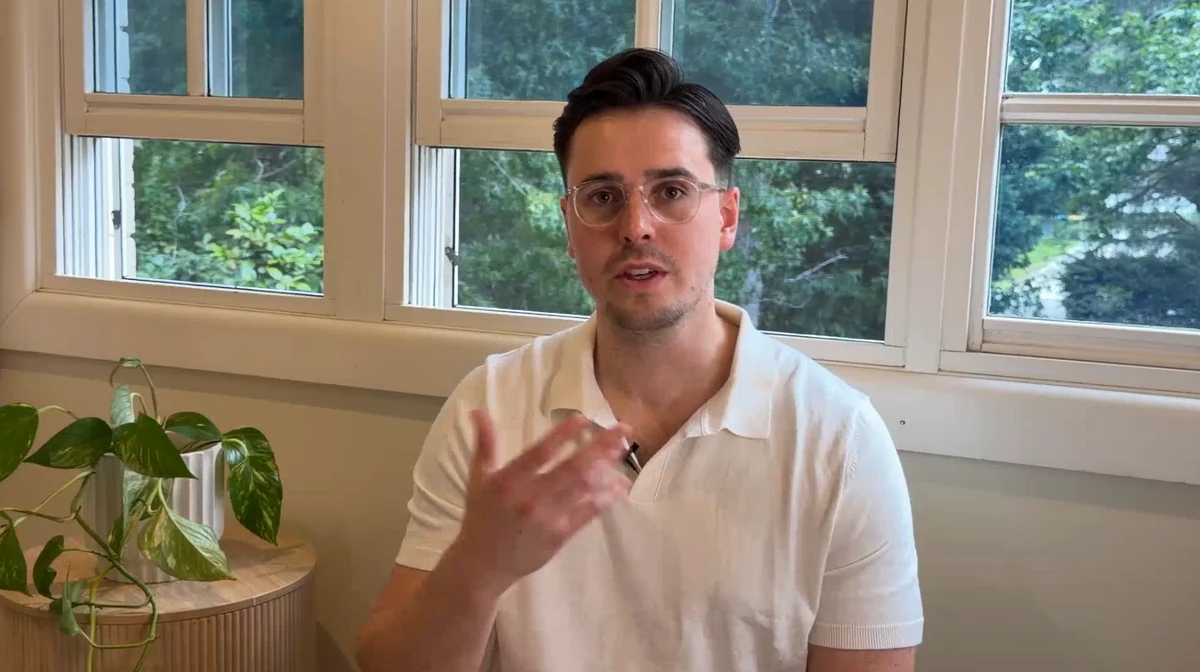
Meet James in 2 minutes: how therapy works at MindSure Psychology.
A warm, direct, evidence‑based approach
I'm the Principal Psychologist and Clinical Psychology Registrar providing depression therapy for adults on the Central Coast and in Hornsby. My approach is warm, collaborative, and grounded in what the research supports, focused on helping you understand what's happening, gently rebuild momentum, and develop practical skills for meaningful, lasting change.
I've worked across Queensland Health, Aurora Healthcare, Griffith University Psychology Clinic, and private practice in Sydney, the Gold Coast, and the Central Coast.
Depression responds well to evidence-based therapy, and the approaches I use (CBT with behavioural activation, ACT, DBT-informed skills, and EMDR where relevant) have decades of research behind them. The goal isn't just symptom relief. It's helping you re-engage with what matters, build durable skills, and leave therapy with tools you can keep using.
Many of my clients are men in their 20s–30s, though I work with adults of all ages and genders. If you're specifically looking for a male psychologist, I provide a grounded, collaborative approach that respects your pace and goals.
Learn more about my background & approach →Four things people ask before starting depression therapy
Answered directly, so you know what you're walking into.
The different shapes depression takes
Depression isn't one thing. Different patterns respond to different strategies, so treatment is tailored to how yours actually operates. Tap any area to learn more.
Major depressive episode (MDD)
A distinct period (typically lasting weeks or months) of persistently low mood, loss of pleasure, and changes in sleep, appetite, energy, concentration, or self-worth. Daily functioning is usually meaningfully affected.
- Persistent low mood
- Loss of pleasure
- Fatigue
- Concentration problems
Persistent depressive disorder (dysthymia)
A longer-lasting, low-grade form of depression (often years long) where mood is chronically flat rather than severely low. People often describe feeling "this is just how I am" and don't realise how much it's shaping their life.
- Long-standing low mood
- Low-grade
- Baseline flatness
- "Always been like this"
Burnout-related depression
Depression that emerges from sustained overwork, caregiving, or high-stress periods, often in conscientious, high-functioning people. Exhaustion slides into flatness, cynicism, and a loss of meaning in work that used to matter.
- Exhaustion
- Cynicism
- Loss of meaning at work
- Overwork
Situational or adjustment depression
Low mood triggered by a specific event or transition: relationship breakdown, job loss, health diagnosis, relocation, family change. Distinct from MDD but no less painful, and highly responsive to structured support.
- Breakups & loss
- Job changes
- Health events
- Major transitions
Mixed depression and anxiety
Very common: anxiety and depression often co-occur, with each reinforcing the other. Anxiety drains energy into worry; depression flattens motivation; both feed avoidance. Treatment addresses both sides of the loop.
- Worry + flatness
- Tension + fatigue
- Avoidance
- Ruminating + catastrophising
Seasonal pattern (SAD)
Recurrent low mood tied to time of year, typically worsening through autumn and winter and lifting in spring. Even on the Central Coast with milder winters, shorter days, less morning light, and reduced outdoor activity can still shift mood noticeably.
- Winter worsening
- Low morning light
- Increased sleep
- Carbohydrate cravings
Grief-linked depression
Grief and depression overlap but aren't the same. When grief becomes prolonged, stuck, or complicated by self-blame, isolation, or an inability to re-engage with life, supportive therapy can help, without rushing the process or pathologising normal grief.
- Loss of a loved one
- Prolonged grief
- Stuck mourning
- Identity loss
Perinatal & postnatal depression
Low mood, anxiety, or overwhelm during pregnancy or after birth, often underpinned by sleep deprivation, hormonal change, identity shifts, and pressure to feel joyful when you don't. Affects both mothers and, less widely recognised, fathers and non-birthing partners.
- Pregnancy mood changes
- Postnatal low mood
- Parental identity shift
- Sleep-driven overwhelm
ADHD-linked depression & burnout
Depression that builds from years of masked ADHD: chronic underperformance relative to potential, rejection sensitivity, task paralysis, and the exhausting effort of over-compensating. Often improves markedly once ADHD itself is recognised and addressed.
- Chronic underperformance
- Rejection sensitivity
- Task paralysis
- Cumulative burnout
Not sure what type, or a mix of things
It's very common to recognise parts of several, or to know something isn't right without a clear label. The first session helps make sense of what's actually going on, so treatment can be tailored properly. You don't need a diagnosis to start.
Depression is one of the most treatable mental health conditions
Cognitive Behavioural Therapy with behavioural activation has decades of clinical trial evidence supporting its effectiveness for depression, with many people noticing meaningful improvement within the first 6–10 sessions, and full treatment courses typically running 8–20 sessions depending on complexity.
Acceptance and Commitment Therapy (ACT), DBT-informed skills, and EMDR (when depression is linked to specific memories or trauma) are also evidence-based approaches with strong research support. Your treatment plan draws from whichever approach suits your goals best, and adjusts as we go.
The first session, and how you'll know it's working
What the first session involves, and the small shifts that tend to show up as therapy starts working.
What actually happens
The first session is about getting clarity and building a plan. We'll typically cover:
- What brought you in now: what's changed, what's reached a limit
- How depression shows up: mood, energy, sleep, thinking, what you've stopped doing
- What keeps it going: withdrawal, self-criticism, rumination, routine drift
- What you want to be different in practical, real-world terms
- A personalised treatment plan: paced to what feels manageable
By the end, you should leave with a clearer, non-judgemental understanding of your depression, and usually one or two small things to start with.
How to tell therapy is working
Progress is rarely a sudden "lift". It's usually a set of measurable shifts:
- Momentum is returning: starting tasks feels slightly less impossible
- Small enjoyable moments are landing again, even briefly
- Self-criticism softens: the inner voice gets less harsh
- You're withdrawing less: reaching out, keeping plans
- Sleep and routine steady, even slightly
- Rumination loosens: less time stuck replaying
- You're making decisions from values rather than avoidance
Real change often shows up in how you engage with life, even before mood itself fully lifts.
Does any of this feel familiar?
Tap anything that resonates. There's no score and nothing is saved; it's just a way of noticing patterns.
Tap any item that feels familiar; your reflection appears here.
Supporting adults across the Central Coast
MindSure Psychology is based in Gosford CBD (Suite 112, 159 Mann St, inside John's Place), a short drive for most of the Central Coast and walkable from Gosford train station.
I regularly see adults travelling in from nearby suburbs, including:
In-person or telehealth, whatever fits
If you're within a short drive of Gosford, sessions are available in person or via telehealth. Appointments include daytime and evening times to suit work and family commitments.
Gosford hours: Wed–Fri 11:30am–7:30pm
In-person sessions are also available at our Hornsby location, supporting adults from Wahroonga, Waitara, Asquith, Normanhurst, Thornleigh, and Berowra.
Telehealth available anywhere in Australia
A practical option if you're working long hours, the drive feels like too much, have kids at home, or depression itself makes leaving the house harder than usual.
Transparent pricing
$138.45 per session
Out-of-pocket cost with a Medicare rebate
Full session fee is $240 per 50-minute appointment. A Medicare rebate of $101.55 applies with a GP Mental Health Treatment Plan.
Common questions about depression therapy
Quick answers to what people most commonly ask before starting.
Do I need a GP referral to see a psychologist for depression?⌃
No. You can book directly without a referral. If you'd like a Medicare rebate, you'll usually need a GP appointment for a Mental Health Treatment Plan, but many people start therapy first and organise that afterwards.
Does my Mental Health Treatment Plan expire?⌃
No. Your Mental Health Treatment Plan doesn't expire, so you can start using it at any time, even if it was written a while ago. Medicare rebates are capped at 10 sessions per calendar year, and the cap resets each January. You can read more on healthdirect.
How long does depression therapy usually take?⌃
It varies depending on complexity. Many people notice meaningful improvement within 6–10 sessions; others benefit from longer-term support, particularly if depression has been long-standing or sits alongside anxiety, ADHD, trauma, or burnout. We review progress together regularly and adjust the plan as needed.
Can therapy help if I'm already on antidepressants?⌃
Yes. Combining medication and therapy is often more effective than either alone, and tends to reduce relapse after medication is reduced or stopped. If you're on medication, therapy works alongside it, coordinating with your GP or psychiatrist where helpful.
My MHTP is addressed to another psychologist. Is that okay?⌃
Yes. In most cases, you can still use a valid GP Mental Health Treatment Plan even if it's addressed to a different psychologist. As long as the referral is current and you consent to seeing a different provider, Medicare rebates are usually still available.
What if I don't feel "depressed enough" for therapy?⌃
You don't need to be in crisis. Many people seek help for ongoing low mood, flatness, or burnout-linked depression while still "functioning" on the outside. Starting earlier usually means faster, easier progress.
What is high-functioning depression?⌃
High-functioning depression is a popular term rather than a formal diagnosis. It usually describes someone who keeps up with work, study, and daily responsibilities while privately struggling with persistent low mood, fatigue, self-criticism, or a loss of enjoyment. Because things look fine from the outside, it often goes unnoticed and untreated. Clinically, this pattern is closest to persistent depressive disorder, a depression defined by how long it lasts, at least two years, rather than by how severe it is; its long-standing, often milder form was previously called dysthymia. Persistent low mood can be just as wearing as a shorter, sharper episode, so you do not need to be unable to function for it to be worth support.
Is high-functioning depression the same as dysthymia?⌃
Not quite, though they are closely related. Dysthymia is a chronic form of depression, often milder day to day but longer-lasting, that continues for two years or more. The DSM-5 now groups it, together with chronic major depression, under persistent depressive disorder, which is defined by that long duration rather than by severity; it can range from mild to severe, and being constant can make it as disabling as a shorter episode. High-functioning depression is an informal description of coping on the outside while struggling underneath, and it can occur alongside persistent depressive disorder, major depression, or on its own. A psychologist or GP can help you understand what you are experiencing, but you do not need a label to seek support.
Is therapy confidential?⌃
Yes, with standard limits (such as immediate risk of harm, child safety, or legal requirements). Records are stored securely in line with Australian Privacy Principles.
Do you offer telehealth?⌃
Yes. Telehealth is available anywhere in Australia, a practical option if you're working long hours, have kids at home, or if the prospect of getting out the door feels like too much right now.
What happens in the first session?⌃
We'll focus on understanding how depression shows up for you (mood, energy, thinking, behaviour, what you've stopped doing) and what you'd like to be different. Many people find that simply having a clear explanation is a relief. You'll usually leave with one or two small practical steps to try.
How do I know if you're the right psychologist for me?⌃
Fit matters. The first session is a good way to see whether my approach feels right, and you're welcome to simply say so if it doesn't. If you're weighing up options beforehand, this guide to choosing a psychologist in Gosford covers what to look for, what to ask, and how to avoid common pitfalls.
Have a question that isn't covered here? See our full FAQs.


MindSure Psychology is a proud community partner and sponsor of local sporting clubs.



It doesn't have to stay this heavy
Reaching out can be one of the hardest parts; we'll take it at your pace, and you don't need to have it all figured out before the first appointment.