



Practical therapy for
stress, overwhelm, and burnout
Evidence-based support for adults across the Central Coast & in Hornsby, in-person or via telehealth. Structured, collaborative, and paced for people running on empty.
Evidence-based support for adults across the Central Coast & in Hornsby, in-person or via telehealth. Structured, collaborative, and paced for people running on empty.




A clearer, more sustainable way out of running on empty
Stress is part of life, but when it builds for too long, it stops feeling like pressure and starts feeling like a baseline. Sleep suffers. Energy disappears. Things that used to feel manageable start feeling impossible. And rest, when you finally get it, doesn't restore you the way it used to.
That's usually the line where stress becomes burnout: a state of chronic depletion, detachment, and reduced capacity that doesn't resolve with a weekend off. It's a signal your system has been under strain for longer than it was designed to handle.
Therapy offers a structured way to recover, not through vague advice or "just take it easy", but by understanding what's been maintaining the strain, calming your nervous system, and rebuilding capacity at a pace that actually works.
I'm James Wightman, a registered psychologist providing stress and burnout treatment to adults from across the Central Coast, including Erina, Terrigal, Woy Woy, Wyoming, Kariong, Narara, and surrounding suburbs. Sessions are available in-person in Gosford, in Hornsby, or via telehealth anywhere in Australia.
Ready to start? You can book online, or view Fees & Rebates for Medicare rebate information.

You can book online in under 2 minutes, or call if you'd prefer.
Check availability →Why stress and burnout are harder to shift than they should be
Burnout doesn't persist because you lack willpower or haven't "taken enough time off". It persists because certain patterns quietly keep your system in overdrive, often the very ones that used to help you cope:
- 1Pushing through feels responsible, but erodes capacityThe same drive that got you here keeps you overextending. Each week you push past empty, your baseline resets lower.
- 2Rest stops being restorativeWhen the nervous system is stuck in "on", weekends, holidays, even full nights of sleep don't replenish you properly. You wake up already tired.
- 3Perfectionism raises the bar as capacity dropsStandards stay high even as energy falls. Small tasks start feeling enormous, self-criticism fills the gap, and motivation collapses.
- 4The body stays on alert, even on good daysChronic stress keeps the nervous system tuned to threat. Tension, shallow breathing, broken sleep, and gut issues become normal background noise.
- 5Boundaries feel risky, so demands keep expandingSaying no, delegating, or slowing down feels unsafe when identity is tied to performance. So the load keeps growing until something gives.
Therapy works by targeting these maintaining patterns directly, not by adding more willpower or rest to a system that's stopped responding to either.
How stress and burnout actually show up
Burnout rarely announces itself. More often, it shows up as:
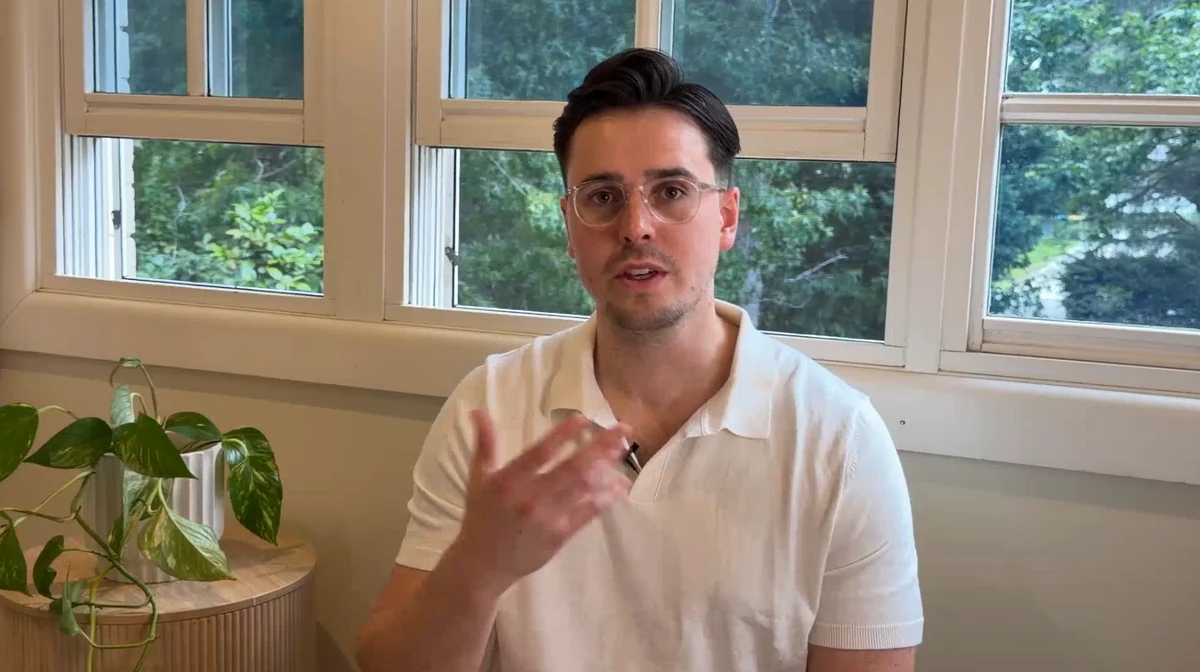
Meet James in 2 minutes: how therapy works at MindSure Psychology.
A warm, direct, evidence‑based approach
I'm the Principal Psychologist and Clinical Psychology Registrar working with adults experiencing stress, overwhelm, and burnout on the Central Coast and in Hornsby. My approach is warm, collaborative, and grounded in what the research supports, focused on helping you rebuild capacity and a healthier relationship with demand.
I've worked across Queensland Health, Aurora Healthcare, Griffith University Psychology Clinic, and private practice in Sydney, the Gold Coast, and the Central Coast.
Sessions are paced around what you have capacity for, not loaded with homework you don't have the bandwidth to do.
Learn more about my background & approach →How ongoing stress becomes burnout, stage by stage
Burnout rarely arrives overnight. It builds in layers, and most people only recognise the early stages in hindsight. Tap any stage to see what it feels like, why it sticks, and what therapy targets at that point, and where you might be right now.
The cascade
Viewing Stage 1 · Drive
How stress and burnout can show up
Burnout isn't one thing. Different patterns respond to different strategies, so treatment is tailored to the shape yours actually takes. Tap any area to learn more.
Workplace burnout & chronic job stress
Sustained workload, understaffing, poor boundaries, toxic team dynamics, or jobs with high emotional demand. Often looks like exhaustion + cynicism about work + reduced effectiveness: the classic burnout signature.
- Workload & understaffing
- Toxic dynamics
- Long hours
- Role ambiguity
Caregiver & parental burnout
Ongoing caring responsibilities: for children (especially with additional needs), ageing parents, or partners with chronic illness. Often combined with guilt, identity loss, and nowhere to hand the load over to.
- Parental burnout
- Caring for elderly
- Partner illness
- Guilt & identity loss
Perfectionism-driven burnout
Internal standards that stay high no matter how depleted you become. Driven by fear of failure, disapproval, or letting people down. Burnout here is often invisible from outside; everything still looks polished while exhaustion builds underneath.
- Fear of failure
- Over-preparing
- Self-criticism
- Imposter feelings
ADHD & executive function burnout
The cumulative cost of years of over-compensating for executive function challenges: task-switching, time-blindness, missed deadlines, late-night catch-ups. Often combined with rejection sensitivity and shame-driven productivity cycles.
- Executive overload
- Overwhelm cycles
- Shame spirals
- Rejection sensitivity
Autistic burnout & sensory overload
Sustained masking, sensory overwhelm, social demand, and navigating environments that weren't built for your nervous system. Rest alone often doesn't resolve it; what's needed is low-demand recovery and environment change.
- Masking fatigue
- Sensory overload
- Social exhaustion
- Shutdowns
High-achiever & identity burnout
When identity becomes tightly bound to output, productivity, or achievement. Slowing down feels like losing a version of yourself. Often shows up in founders, senior roles, high-performing professionals, and athletes.
- Identity-performance fusion
- Fear of slowing down
- Comparison anxiety
- Relentless pace
Stress + sleep issues
Stress and sleep problems reinforce each other: poor sleep raises the stress load the next day, and stress keeps the system too activated to sleep properly. The loop can be targeted directly.
- Racing mind at night
- 3am waking
- Unrefreshing sleep
- Fatigue-stress spiral
Stress + anxiety or low mood
Chronic stress and burnout commonly coexist with anxiety (worry, panic, overthinking) or depression (flatness, hopelessness, withdrawal). Treatment addresses the underlying depletion alongside the anxious or depressive overlay.
- Worry & overthinking
- Flatness
- Withdrawal
- Hopelessness
Not sure what kind, or a mix
It's very common to recognise parts of several, or to know something isn't right without a clear label. The first session helps map what's actually driving it, so treatment can be tailored properly. You don't need a diagnosis to start.
Four things people ask before starting burnout therapy
Answered directly, so you know what you're walking into.
Stress and burnout are highly responsive to the right kind of therapy
Burnout isn't a character flaw or a lifestyle problem; it's a recovery deficit in a system that was pushed too hard for too long. Cognitive Behavioural Therapy (CBT) and Acceptance and Commitment Therapy (ACT) both have strong research support for stress-related conditions, including work-related burnout, chronic stress, and the anxiety and low mood that often accompany them.
Most people notice meaningful change within the first 4–8 sessions, particularly once the nervous system starts to settle. A full course typically runs 8–16 sessions depending on how entrenched the pattern is and whether it sits alongside anxiety, trauma, or longstanding perfectionism. Your plan is adjusted as you go.
The first session, and how you'll know it's working
Straight answers, not marketing, so you know what you're walking into and what changes to look for over time.
What actually happens
The first session is about getting clarity and building a plan, paced to what you have capacity for right now. We'll typically cover:
- What brought you in now: what's changed, what's reached a limit
- Where you are in the cascade, so we know what stage we're working with
- What's been maintaining it: load, recovery deficit, perfectionism, roles
- What you want to be different in practical, real-world terms
- A personalised plan: paced, not overwhelming, and adjustable
By the end, you should leave with a clearer map of what's going on, and usually one or two things to start doing (or stop doing) straight away.
How to tell therapy is working
Burnout recovery is rarely a straight line. It's a set of measurable shifts that build on each other:
- You wake up with more energy, even slightly, and it holds through more of the day
- Rest starts to feel restorative again
- You recover faster after a hard day instead of carrying it into the next week
- Irritability drops, and you have more patience for the people who matter
- Decisions get easier: small ones first, then bigger
- You say no to something without it causing a week of guilt
- You reconnect with something you'd stopped noticing: a hobby, a friend, a sense of perspective
Real recovery often shows up in how you respond to pressure, long before pressure itself goes away.
Does any of this feel familiar?
Tap anything that resonates. There's no score and nothing is saved; it's just a way of noticing patterns.
Tap any item that feels familiar. Your reflection appears here.
Two clinic locations, plus telehealth Australia-wide
In-person stress and burnout therapy is available at either of our two clinics, whichever is closer. Both offer the same approach, the same psychologist, and the same fees.
Gosford · Central Coast
Suite 112, 159 Mann St (inside John's Place), walkable from Gosford train station.
Hours: Wed–Fri 11:30am–7:30pm
Serving adults from:
Hornsby · Upper North Shore
Convenient for the Upper North Shore and northern Sydney, a direct option if the M1 commute isn't for you.
Serving adults from:
Telehealth, anywhere in Australia
Telehealth works particularly well for stress and burnout, especially when travel, kids, long hours, or low energy make in-person sessions harder to commit to. Same evidence-based approach, without the drive.
- No travel time required
- Daytime & evening options
- Medicare rebates apply
Transparent pricing
$138.45 per session
Out-of-pocket cost with a Medicare rebate
Full session fee is $240 per 50-minute appointment. A Medicare rebate of $101.55 applies with a GP Mental Health Treatment Plan.
Common questions about stress & burnout therapy
Quick answers to what people most commonly ask before starting.
How quickly can I get an appointment?⌃
You can check live availability and book directly online, or call (02) 4313 1656.
Do I need a GP referral?⌃
No. You can book directly without a referral. If you'd like a Medicare rebate, you'll usually need a GP appointment for a Mental Health Treatment Plan, but many people start therapy first and organise that afterwards.
Does my Mental Health Treatment Plan expire?⌃
No. Your Mental Health Treatment Plan doesn't expire, so you can start using it at any time, even if it was written a while ago. Medicare rebates are capped at 10 sessions per calendar year, and the cap resets each January. You can read more on healthdirect.
How do I know if it's stress, burnout, or something else?⌃
Stress and burnout often overlap with anxiety, low mood, or trauma responses. The first session helps clarify what's going on and identify the contributing factors, so we can focus treatment where it will help most, without rushing to a label.
How long does therapy usually take?⌃
It varies by complexity. Many people notice meaningful change within 4–8 sessions, with full courses typically running 8–16. Longer support is often useful where burnout sits alongside long-standing perfectionism, trauma, or ADHD.
I'm still working, so do I really need therapy?⌃
You don't need to reach breaking point. Many people start therapy while still fully functional but quietly depleted. Starting earlier almost always means faster recovery and fewer sessions.
What if I don't have energy for therapy right now?⌃
Very common concern, especially at the depletion stage. Early sessions are paced around your current capacity, not loaded with homework. Telehealth removes travel. Many clients find that the first few sessions feel like taking weight off, not adding it.
My MHTP is addressed to another psychologist. Is that okay?⌃
Yes. In most cases, you can still use a valid GP Mental Health Treatment Plan even if it's addressed to a different psychologist. As long as the referral is current and you consent to seeing a different provider, Medicare rebates are usually still available.
Do you offer telehealth?⌃
Yes. Telehealth is available anywhere in Australia and works particularly well for stress and burnout. It's a practical option if you're working long hours, have kids at home, or just prefer not to drive.
Have a question that isn’t covered here? See our full FAQs.


MindSure Psychology is a proud community partner and sponsor of local sporting clubs.



Ready to start recovering?
It's normal to feel unsure about starting, particularly if you're already running on empty. We'll take it at your pace, and you don't need to have it all figured out before the first appointment.